
Arizona is a state built for road trips. Between the red rock canyons of Sedona, the pine forests of Flagstaff, the saguaro-studded deserts around Tucson and the sprawling Phoenix metro area, travelers cover long distances and often end the day tired, dusty and in need of a simple place to sleep.
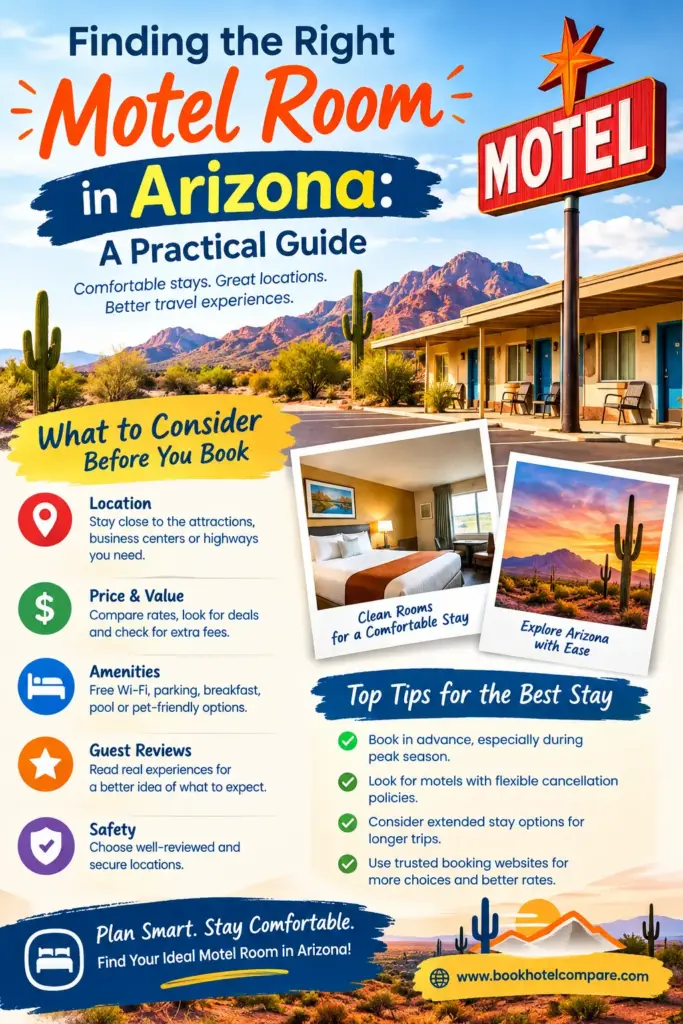
That is where the Arizona motel comes in. Affordable, convenient and often full of character, a good motel room can be the best-value stop on your journey.
This guide explains how to find one, what to look for, and how to get the most from your stay.
Why Choose a Motel in Arizona?
The word “motel” blends “motor” and “hotel,” and the format still fits the way people travel through the Southwest. Rooms typically open directly onto the parking lot, so you can unload bags without dealing with lobbies, elevators or parking garages. That matters in a state where summer afternoons can push past 110°F in the low desert, and where you may be hauling coolers, hiking gear or camera equipment.
Motels are also usually cheaper than full-service hotels and resorts. Arizona’s resort corridors in Scottsdale and Sedona can be expensive, especially in peak season. A clean, no-frills motel lets you save money for the things you came for: tours, park fees, good meals and fuel.
Finally, Arizona has a rich motel heritage. Route 66 and the older highways that cross the state were lined with mid-century motels, and many survive today, some lovingly restored with retro signs and vintage décor. Staying in one can be part of the experience rather than just a place to crash.
The Best Areas to Stay
Where you base yourself will shape your trip, so it helps to know the main regions.
Phoenix, Tempe, Mesa and Scottsdale
The Phoenix metro area is the state’s hub, with a huge range of motels along major corridors and near the airport.
If you are visiting for a concert, a sporting event or spring training baseball, staying in Tempe or Mesa can be cheaper than staying in central Scottsdale, and light rail and highways make getting around manageable. Look for properties near freeway exits for easy access, but check recent reviews for noise.
Tucson
Tucson has a long stretch of motels and inns, especially along older roads such as Oracle Road and Benson Highway. It is a good base for Saguaro National Park, the Arizona-Sonora Desert Museum and the city’s well-regarded food scene.
Some of Tucson’s older motels have been renovated with a retro-modern style that photographs well and often costs less than a chain hotel.
Flagstaff and Williams
Flagstaff sits at high elevation and offers cooler summers and snowy winters. It is a popular base for the San Francisco Peaks, Lowell Observatory and day trips to Sedona and the Grand Canyon.
Historic Route 66 runs through town, and many motels along it have classic signage. Williams, about an hour west, is a smaller town with its own Route 66 charm and is a common gateway for the Grand Canyon Railway and the South Rim.
Sedona and the Verde Valley
Sedona is famous for red rock scenery and is also famous for high lodging prices. Budget travelers often stay in nearby Cottonwood or Camp Verde and drive in for the day. You give up the immediate scenery but gain a lower nightly rate and often easier parking.
Page, Kingman, Holbrook and Beyond
Smaller towns can be real finds. Page puts you near Lake Powell and Antelope Canyon. Kingman is a convenient stop on the way between Las Vegas and Arizona’s interior.
Holbrook, near the Petrified Forest National Park, is known for its unusual teepee-style motel rooms, a quirky roadside classic worth a night if you enjoy novelty. Yuma, in the southwest corner, and Bisbee in the southeast each offer their own small-town lodging options.
When to Go: Timing and Pricing
Arizona’s seasons run almost opposite to much of the country, and motel prices follow.
Winter and early spring (roughly January to April) are peak season in Phoenix and Tucson. Mild weather draws “snowbirds” escaping colder states, and baseball spring training fills rooms in February and March. Book early and expect higher rates.
Summer (June to September) is the low season in the desert, with the lowest prices in Phoenix and Tucson. Many motels offer discounts, and pools become a necessity rather than a perk. In contrast, high-elevation towns like Flagstaff and Williams are busier in summer because people head north to escape the heat. Remember that monsoon season brings sudden thunderstorms and flash flooding from roughly mid-June through September, so check forecasts if you plan to drive on desert roads or visit slot canyons.
Fall (October to November) is a pleasant shoulder season with comfortable temperatures and moderate prices, though weekends around major events can still fill up.
A simple rule: if you can travel midweek, you will often pay less than on Friday or Saturday nights, especially in tourist towns.
What to Look for in a Motel Room
Not all motels are equal, and a little checking before you book can save a lot of frustration.
Air conditioning that works. In Arizona, this is not optional. Read recent reviews for comments about cooling, and if you arrive and the room is warm or the unit is weak, ask for a different room right away.
Cleanliness. This is the most important factor for most travelers. Look at recent guest photos and reviews rather than only the property’s own images. Pay attention to comments about bedding, bathrooms and odors.
Location and safety. Check the neighborhood on a map. Well-lit parking close to your room, visible staff and a location near restaurants and gas stations are good signs. If the reviews repeatedly mention security concerns, consider another option.
Amenities that matter to you. Many motels offer free Wi-Fi, a mini-fridge, a microwave and a small pool. If you are traveling with kids, a pool can be a lifesaver after a day of sightseeing. If you are staying several nights, a kitchenette can cut your food costs significantly.
Pet policies. Plenty of Arizona motels accept pets, but fees and size limits vary. Confirm before you arrive, and ask whether pets may be left alone in the room.
Parking. If you drive a large vehicle, tow a trailer or carry motorcycles, confirm there is enough space and that it is reasonably secure.
Check-in details. Some smaller motels have limited office hours or require a security deposit at check-in. If you expect to arrive late, call ahead so your room is not released.
How to Find and Book a Room Near You
When you are looking for something nearby, a few methods work well together.
Start with a map-based search. Searching for motels on a mapping app shows distance, photos, ratings and recent reviews at once. Sort by rating but read the lower-rated reviews too, since they reveal the problems you would actually care about.
Compare booking sites with the property’s own number or website. Online travel agencies are convenient, but calling the motel directly can sometimes produce a better rate, a room upgrade or flexibility on cancellation, particularly at small independent properties.
Check cancellation terms. Plans change on road trips, so a free-cancellation rate is often worth a few extra dollars.
For last-minute stays, many people simply drive into town and look for vacancy signs. This can work in smaller towns during slower seasons, but in busy periods or small places with few rooms, you risk finding everything full, so it is smarter to book at least a day ahead when you can.
Chains vs. Independent Motels
National budget chains offer predictability: you generally know what a room will look like, and loyalty programs can earn free nights. They are a safe choice when you want consistency and have little time to research.
Independent motels vary more, from tired and worn to charming and well kept. The best ones offer personality, friendly owners and local tips you will not get at a chain desk. The risk is inconsistency, which is why reading recent reviews matters so much. A family-run motel with strong, recent praise for cleanliness is often a better stay than a chain property with sagging reviews.
Tips for a Smoother Stay
- Inspect the room before you commit. If you can, look at the room before unpacking. Check the bed, the bathroom, the AC and the door lock.
- Bring a few basics. A small fan or white noise app, earplugs, flip-flops for the shower and a refillable water bottle make budget stays more comfortable.
- Stay hydrated and plan for heat. In summer, never leave pets, children or electronics in a parked car, and keep plenty of water in the vehicle.
- Ask about local recommendations. Motel owners often know the best breakfast spot, the quietest trail or the shortcut around traffic.
- Confirm what is included. Some motels offer free breakfast or coffee; others charge resort-style fees. Ask about extra charges before you pay.
- Respect quiet hours. Thin walls are common in older motels, so be considerate of neighbors and expect to hear a little yourself.
Budget Expectations
Prices change with season, location and demand, so check current rates rather than relying on old numbers. As a general pattern, small-town and off-season motels cost the least, while rooms in Sedona, near the Grand Canyon and in Scottsdale during peak months cost the most. Be sure to account for taxes and any additional fees when comparing offers, since the advertised nightly rate is not always the final total.
Final Thoughts
A motel room in Arizona is more than a bed. It is a practical base for exploring one of the most dramatic landscapes in North America. Choose your region based on what you want to see, time your visit to match your budget and tolerance for heat, and read recent reviews carefully before you book. Prioritize cleanliness, working air conditioning and a safe location, and treat any retro charm as a bonus rather than a requirement.
Whether you end up in a neon-lit Route 66 classic in Flagstaff, a renovated mid-century courtyard in Tucson or a simple roadside stop near the Grand Canyon, a well-chosen motel can make your Arizona trip easier, cheaper and a lot more memorable. Pack your sunscreen, fill your water bottle and hit the road.